




Choosing the best business credit card.
There is no such thing as the best business credit card. But there is a card that's best suited to the way your organization makes payments.
Which card is suitable depends on who is paying, how much someone is allowed to spend, where the money comes from and what happens to the receipt afterwards. Below you can see which type of card is suitable for each situation, even if it’s a bank card.


One card is sorted in no time. Forty cards, not so much.
You can apply for a credit card for a travelling director in an afternoon. But if 40 staff members across eight locations have to pay out of their own pockets, that’s when the hassle begins. You have to apply for each card separately, the cards are passed from hand to hand, and at the end of the month you’re chasing up receipts.
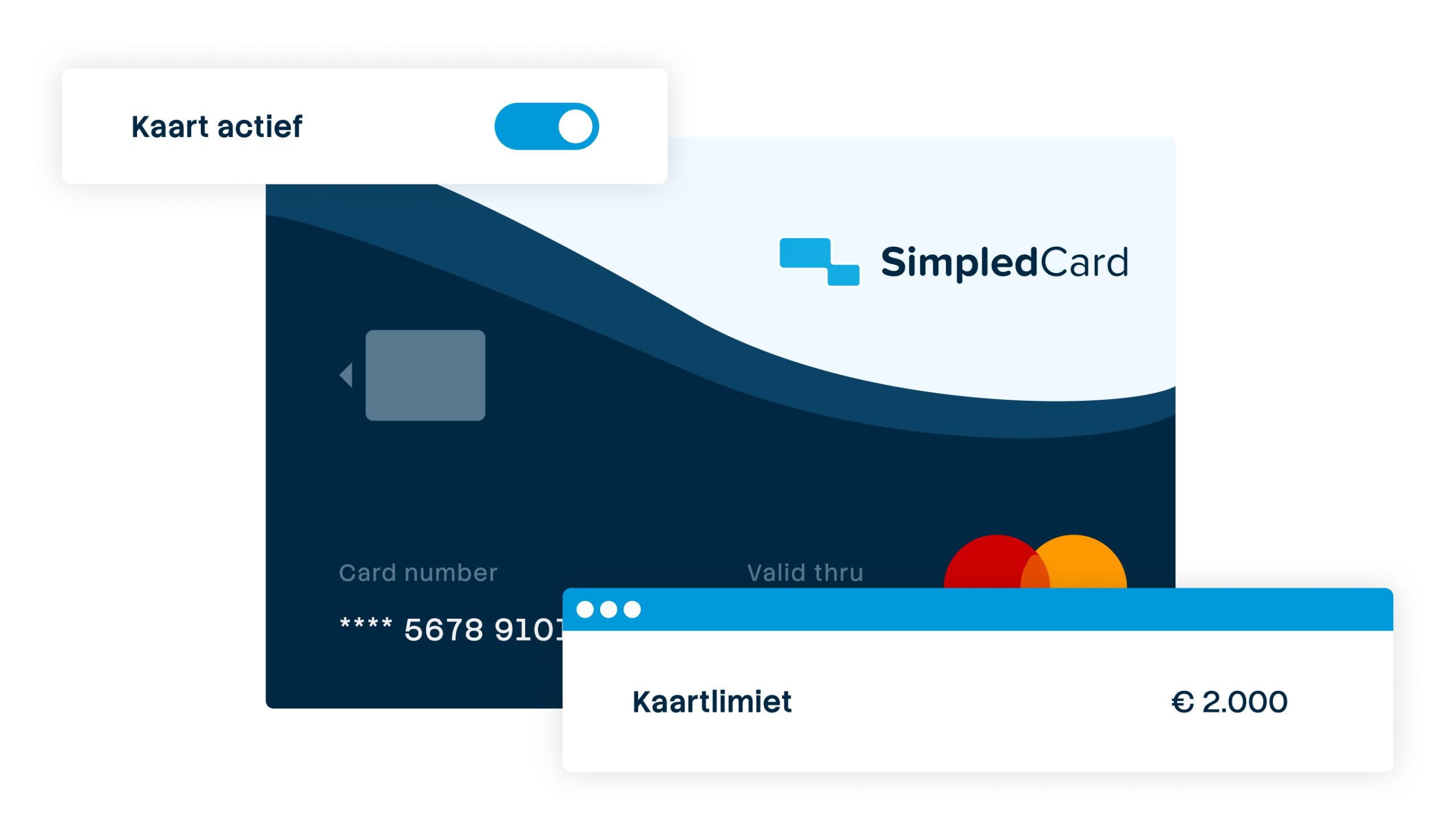
Anyone holding that card often has access to far more money than is needed for lunch during a team meeting. Whether that money comes from the bank or your own balance determines how much control you have over it. Most organizations only start thinking about the work involved after the payment has been made, once the first monthly accounts have been finalized.

Weekly budget
€ 2000,-

Bank credit card
For one or more cardholders who travel and pay afterwards.

Debit card linked to your account
For the self-employed and small teams who pay directly from their account.

Cards with spend management
For teams at sites and on projects, with expense claims, approval and booking for every payment.

Type A: the bank’s credit card
The bank advances one month’s expenditure and then writes it off in one go.
The bank assesses your organization on the basis of factors including your annual accounts and BKR credit history, and determines how much you can spend. You must apply for each employee card separately. If your company is less than two years old, the limit is low; with ICS, it is a maximum of €500.
Suitable for:
- One or more cardholders;
- Travel, hotels and car hire with a deposit;
- A one-month deferral of payment.
A card costs around €40 to €50 a year, whilst a premium card costs several hundred euros. A surcharge of 2.5% is usually applied to payments in other currencies.
Is it just one director travelling, or do two or three people occasionally pay for a hotel? In that case, a credit card from the bank is a good choice.

Type B: the debit card linked to your business account
Every payment is debited directly from your business account, with no credit involved.
Your bank’s payment card is a debit card, traditionally a Maestro or V PAY card. You can use it to pay in almost any shop or supermarket. Fintechs such as bunq and Qonto increasingly issue the newer Debit Mastercard, which also works online.
In many schools, each site has its own sub-account, and only the headteacher has a card for it. If the headteacher lends the card to a member of staff to buy supplies for a cooking lesson, that staff member can access the entire budget for that site. With bunq or Qonto, you choose a plan with a certain number of cards and set a limit for each one.
With your bank's card and with bunq, the payment is sorted, but the work that follows isn't. Qonto goes one step further, with the receipt attached to the transaction, one-click approval and an integration with your accounting software. To this end, Qonto offers up to 30 physical cards. If you need this for dozens of cardholders across different locations and projects, please read on under type C.
Suitable for:
- Self-employed person and small team;
- Pay daily, directly from your account;
- A copy is sufficient as proof.
With your own bank, you pay the standard fees for your account and your cards. A fintech account costs around €14 to €160 a month, depending on the number of cards.
Do you work on your own, or is a statement sufficient for a small team? If so, a debit card linked to your account is a good choice.

Type C: cards on a spend management platform
A spend management platform combines the card with the follow-up work. The receipt is linked to the payment, the expense is posted to the correct cost type and, via an integration, is transferred directly into your accounts.
You top up the balance in advance and allocate it across cards for each employee, location or team, each with its own limit. This is why medium-sized organizations in particular opt for these cards, to manage expenditure without the need for cash or advances. Companies such as Pleo, Moss, Payhawk, Spendesk, Elari and SimpledCard operate in this way.
Some providers also offer credit facilities. This requires an additional assessment of your business, for example based on turnover and annual accounts, and the provider then determines the credit limit. This means you have less control over the limits per card.
Suitable for:
- Dozens of cardholders at sites or on projects;
- Replace petty cash and advances;
- Multiple branches or entities.
For a team of 10 cardholders, most platforms charge around €140 to €250 per month. Check carefully what's included, as spending volume is often capped and integrations are usually an add-on.
Also ask how the service is organized and who you can contact. Some providers only have a sales representative in the Netherlands; once you’ve signed up, you’ll be put through to an English-speaking member of staff. Other platforms have been set up for global payments or purchasing via purchase orders.
Cards that work wherever your staff make payments
Take a look at all the places where your staff need to be able to make payments.
- In person at the supermarket, DIY store and petrol station;
- Virtual for subscriptions and online shops;
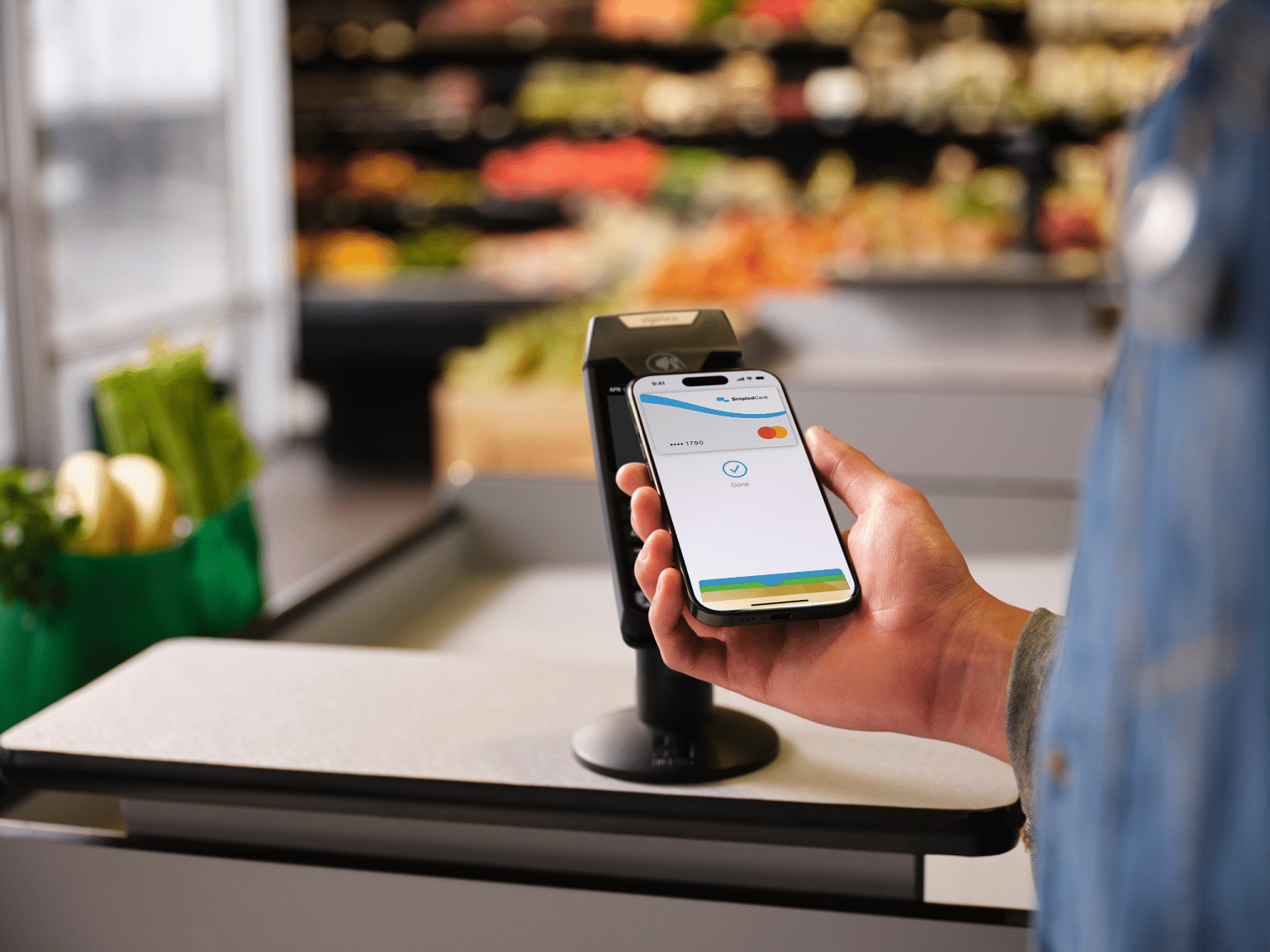
- Via Apple Pay and Google Pay on your mobile;
- Online via iDEAL.
Check with each platform to see which payment methods it supports. Not every platform accepts iDEAL. With a SimpledCard card, you can pay in-store, online and via Apple Pay and Google Pay, all within the same limits.
With the Premium package, you can also pay via iDEAL | Wero, directly from your card balance via your business account. The business account, provided by Adyen, is covered by the Dutch deposit guarantee scheme. This means you benefit from a unique combination that many other providers cannot offer. SimpledCard does not charge a surcharge on foreign currency transactions.
SimpledCard works with what you already have in place: your accounting software, your ERP system or your invoicing system. Every expense arrives coded and with its receipt where it belongs, without retyping. And you can phone a customer service team in the Netherlands.
Adyen will assess your organization, usually within two working days of your documents being complete. You can then assign a card in a matter of minutes. If someone leaves, you can transfer the card to a colleague.
The cards side by side, by type
We’ll compare the cards ourselves, using three small tables. What type of card is it, how do employees get one, who sets the limit, does it have a credit facility, and where is your money held? Compare cards within the same category, as comparing them across different categories is like comparing apples and oranges.
A. Credit cards issued by the following banks: ICS, American Express, ING
| Provider | Type of card | Tickets for staff | Limit per card | The publisher’s fee |
|---|---|---|---|---|
| ICS Mastercard Business or Corporate | Credit card (Mastercard or Visa), pay off the balance in full every month | Can be requested on a per-card basis | ICS sets a company limit; you allocate it across the cards | Annual accounts for two financial years; less than two years: maximum €500; no negative BKR records for the parties concerned |
| American Express Business Gold | Charge card, pay off the balance in full every month | 4 additional cards free of charge, then charged | American Express sets the limit; no mention of setting it per card | Assessment of your profile; American Express checks with BKR |
| ING Business Card | Credit card (Mastercard), debited from your business account every month | Apply via My ING Business | ING sets a limit of up to €50,000; you can allocate this amount across your cards, starting from €500 | An ING business account for 3 months; no BKR check required for a BV or NV |
B. Debit card linked to your business account: your own bank, bunq, Qonto
| Provider | Type of card | Cards for employees | Limit per card | Credit | Where your money is |
|---|---|---|---|---|---|
| Debit card from your own bank | Debit card linked to the account, traditionally Maestro or V PAY, increasingly Debit Mastercard or Visa Debit | Per account, via your bank | Through your bank | Varies from bank to bank | In your bank account, under your bank’s deposit guarantee scheme |
| bunq Business Pro or Elite | Prepaid Company Cards (Mastercard) | Pro: up to 3, Elite: up to 10 Company Cards; each employee needs their own bunq account | Yes, a monthly limit per card | No credit on Company Cards | In a bunq bank account; euro balance covered by the deposit guarantee scheme up to €100,000 |
| Qonto team plans | Debit Mastercard | Essential 5, Business 10, Enterprise 30 physical cards; 50 or unlimited virtual cards | Yes, per month, week, day or transaction | No credit on team cards; a credit card for the director only | Qonto is a payment institution regulated in France, not a bank; customer funds are held separately, partly with partner banks and partly covered by bank guarantees |
C. Cards on an spend management platform: SimpledCard, Pleo, Moss, Payhawk
| Platform | Type of card | Tickets for staff and teams | Limit per card | Own balance or credit | Where to find your balance |
|---|---|---|---|---|---|
| SimpledCard | Prepaid combo card with Mastercard and Maestro profiles, and a Debit Mastercard (both physical and virtual), issued by Adyen | A card per employee, location or team, for an unlimited number of users; you can transfer a card to another employee, so you can keep track of who is spending what | Daily, weekly or monthly limit per card, plus a budget per team | Your own balance. Adyen assesses your organization; employees are not subject to a credit check | In a business account provided by Adyen (European banking licence); balances of up to €100,000 per company are covered by the deposit guarantee scheme administered by De Nederlandsche Bank |
| Pleo | Prepaid Mastercard, physical and virtual | One card per user; sharing cards is not permitted | Monthly, per transaction or on a temporary basis | Own funds, with credit per plan subject to a company assessment, up to €100,000; in plans for larger organizations, up to €500,000 | E-money held by Pleo Financial Services (regulated in Denmark), segregated with partner banks |
| Moss | Mastercard debit and credit | One card per user; no shared cards | Yes, per week, month or year, plus a limit per transaction | Own balance, with credit subject to approval | E-money held by Moss GmbH (regulated in Germany), segregated in separate bank accounts |
| Payhawk | Visa debit; Visa credit upon application | Cards per employee and team cards | Yes, per card | Your own credit limit, with credit of up to €500,000 following a credit check on the business, without a personal guarantee | E-money account with Payhawk Financial Services (regulated in Lithuania), held separately with banks, no deposit guarantee |
The reference date is 30 September 2026; for Moss, it is 24 September 2026; and for the “Where your money is” column, it is 16, 19 and 20 October 2026. “Not listed” means that we could not find this information on the provider’s website, in their terms and conditions or in their help centre. The sources are listed below.
About this comparison
SimpledCard compiled this comparison and is included in it itself. All information about other providers is taken from their websites, terms and conditions or help centres, with the date clearly stated. We review the tables every quarter.
Do you use a comparison website? If so, check whether it receives a commission per enquiry, and whether it compares tickets for a whole team or just individual tickets. Then check the terms and conditions on the provider’s own website.
Sources, accessed 30 September 2026 (Moss 24 September 2026; debit cards, Qonto expense management and business account 16 October 2026; balance details 19 and 20 October 2026)
- ICS: Compare business credit cards; also the Mastercard Business application form, the pages on starting a business, annual figures, spending limits and the Mastercard Business Extra Card, and the Mastercard Business terms and conditions (March 2023)
- American Express: Business Gold Card; also the overview of Business Card annual fees (September 2024), the Business Card agreement (March 2023) and the Business Gold application criteria
- ING: Business card; also the pages on additional cards (services), business credit cards and the BKR, and the Business Card terms and conditions (July 2019)
- Rabobank: Rabo BusinessCard; see also the page on BKR registration in relation to business finance
- Dutch Payments Association: Replacement of Maestro and V PAY with Debit Mastercard and Visa Debit
- bunq: Business subscriptions; also the cards page and the help centre article on Company Cards for employees, the page on deposit guarantees and the DNB page on deposit guarantees for businesses
- Qonto: cards; as well as the pricing page, the credit card page and the page on spend management, and the help centre article on the protection of balances
- SimpledCard: credit card for businesses; also the pages on payment cards, rates and customer service
- Pleo: prices; also the pricing for larger organizations and the frequently asked questions, the page on secure procurement and the EEA framework agreement
- Moss: Overview of Moss maps; as well as the frequently asked questions, the pages on prepaid and virtual cards, and the articles on the e-money licence
- Payhawk: prices and plans; see also the Help Centre article on credit, the terms and conditions, and the frequently asked questions about Payhawk
- BKR: business loan
What our customers say
Claims are now always made digitally. We are up to date with processing expenses at project level a day later. The reservoir of advances and receipts has dried up thanks to SimpledCard.
How to choose the business card that’s right for you
- 1. Count who’s paying
Make a note of how many people need to be able to pay for themselves, and where. If there is just one or a few cardholders, a credit card from the bank is often sufficient. If dozens of people are paying at different locations, choose cards with their own limit per employee or location.
- 2. Work out where the money is coming from
If you want to defer payments for a month, you'll need credit from the bank. With your own account balance, you can set the spending limit for each card yourself. The issuer will then assess your organization as a whole, rather than each individual employee.
- 3. Check what needs to be done after payment
If a statement is enough, a debit card on your account will do. If you want a receipt, approval and an entry under the correct cost type for every payment, then you need spend management. With dozens of cardholders, this is where most of your administrative time is spent.
- 4. Consider the whole picture
Add it all up. Think about the card or subscription, extra cards, foreign currency surcharges, the integration with your accounting system and the time spent on your admin.
Request a quote based on the number of cardholders you have, and read the guide to find out how the pricing models work. If you’re not sure, book a demo. If another card is a better fit, we’ll let you know.
Get started with SimpledCard today
In a demo, we'll show you how cards organized by employee, location or team work with your accounting software. If another card from this comparison is a better fit, we'll let you know.
Frequently asked questions
- Which business card is right for us?
That depends on who is paying, where the money comes from and what needs to happen after the payment has been made. A single person paying retrospectively only needs a credit card from their bank, whilst a small team often only needs a debit card linked to their current account. Dozens of employees who need to submit a receipt, obtain approval and record each payment will require cards linked to a spend management platform.
- Is a bank credit card the best choice for a single director who travels?
Yes, if one director is travelling and no one else is paying. A bank credit card then gives you a one-month payment deferral and a deposit for the hotel and car hire, and you only need to submit one application. Most of them are charge cards, so you repay the month’s expenditure in one go.
- Can 30 staff members be issued with a card without having to submit a separate application for each one?
On a spend management platform, yes. The issuer assesses your organization as a whole, rather than each individual employee, and you can then issue a card in a matter of minutes. With SimpledCard, Adyen carries out that assessment and employees do not undergo a credit check, whereas with a bank, every card requires an application.
- Which prepaid payment cards do medium-sized businesses use?
Medium-sized organizations with dozens of cardholders often opt for prepaid or debit cards with their own balance on a spend management platform. Each card is assigned its own limit, and the receipt, approval and accounting are processed automatically. In the Netherlands, companies such as Pleo, Moss, Payhawk, Spendesk, Elari and SimpledCard operate in this way.
- Why is a single card per location risky?
Whoever holds a location's card has access to that location's entire budget, even if they only need to pay for lunch for a team meeting. You apply to the bank separately for any additional accounts or cards. With cards on a spend management platform, you can give each employee their own card with their own limit.
- Is a business credit card registered with BKR?
Only if the loan is for more than €1,000 and you are personally liable for it. In the case of a sole trader, a general partnership or a professional partnership, this is automatically the case; for a private limited company (BV), it only applies if you act as guarantor or co-sign. ING does not carry out a BKR check for a private limited company (BV) or a public limited company (NV), and according to Rabobank, BKR does not record a credit card that you pay off in full every month.
- Is the SimpledCard card a credit card?
No. SimpledCard is a spend management platform featuring prepaid cards issued by Adyen, and you allocate your own balance across cards, each with its own spending limit. Employees add the receipt in the app, a budget manager approves it, and via the integration with your accounting system, the expense is recorded in your accounts.
- Which card is most widely accepted in shops and supermarkets?
Bank cards such as Maestro and V PAY have traditionally been accepted in almost every Dutch shop and supermarket. Banks are now gradually replacing them with Debit Mastercard and Visa Debit, which also work online. A combo card with a Maestro profile can be used to make payments at the same terminals as a standard bank card.