




Blog overview
Start using SimpledCard immediately?
Check out our packages or contact one of our experts directly!
A healthy cash flow is indispensable for your business operations. It determines not only whether you can pay your bills, but also whether you can invest in growth and unexpected can absorb setbacks. In other words, a healthy cash flow is essential for the continuity of a business.
Yet many companies run into problems due to late payments from customers, unexpected costs and a lack of control over cash flows.
But what exactly is cash flow? How is it different from profit? And why is managing it so important? In this blog, we explain everything you need to know about cash flow: from the basics to practical tips to get a grip on your finances. That way, you can not only improve your current financial situation, but also build a solid, future-proof business.
What is cashflow?
Cash flow is all about the flow of money in and out of your business during a given period, such as a month, quarter or year. In Dutch, we also call this ‘cash flow’. The name may make it seem as if it is only about cash (tangible), but it also includes book money (non-tangible) behoort to cash flow.
The difference between positive and negative cash flow
- Positive cash flow: more money comes in than goes out.
- Negative cash flow: more money goes out than comes in.
Difference between cash flow and profit
Profit and cash flow are not the same thing. Profit is calculated by subtracting expenses from revenues, but this does not provide insight into actual cash flows. You can make a profit while your cash flow is negative. This happens, for example, when many customers pay late, leaving you with money on paper but not in your bank account. Here's how it works: it could be that in a month you had €10,000 turnover and €8,000 expenses. You then have €2,000 profit. At the same time, you may have €7,000 coming into your account and €8,000 going out. For example, because not all your customers have paid yet. That month you then have a negative cash flow even though you made a profit.
Three soorten cashflow
To get a clear picture of your financial situation, it is important to look at the three different types of cash flow:
- Operating cash flow
These are the revenues and expenses arising from day-to-day business activities. Think of payments from customers, salary payments and operational costs such as rent or purchase of materials. - Investment cash flow
Here you look at cash flows related to investments and divestments. Examples include the purchase of machinery or software, or the sale of old equipment. - Financing cash flow
This relates to cash flows from financing activities, such as raising or repaying loans, dividend payments and share issues.
How bcalculate je cashflow?
There are two ways to calculate cash flow:
Direct method
In the direct method, you look at the actual cash flows in your bank account:
- Receipts (e.g. payments from customers)
- Expenses (such as salary payments, rent, procurement costs).
This is a statement of what literally comes in and goes out of the bank account; you will find it in your additions and withdrawals. For example, the cash flow statement looks like this:
- Receipts from customers: + € 10.000
- Salaries paid: - € 4.000
- Rent paid: - € 1,000
- Other costs: - € 1.000
Cash flow: €4,000
With the direct method, you can immediately see which cash flows are responsible for the balance.
Indirect method
In the indirect method, you start with the result (the profit or loss). That result is then corrected to show only the actual cash flows.
You correct the result for:
- Costs that are not expenses, such as depreciation.
- Revenue that is not revenue, such as amounts still to be received (accounts receivable).
- Cash flows from other headings, such as investments or raising and repaying equity or debt.
For example:
- Profit: €4,000
- Depreciation: + €1,000 (no real cash outflow)
- Increase in accounts receivable: - €500 (money yet to be received)
Cash flow: €4,500
With the indirect method, you look more at the underlying causes of cash flow.
Why cashflow management crucial
Profit sounds attractive on paper, but profit alone cannot pay bills. Acquisitions, new investments, dividend payments and even debt repayment - all this is possible only if your cash flow is in order.
A healthy cash flow is indispensable for continuity. Many companies run into problems every year because invoices are not paid on time. Accounts receivable management is therefore very important. It allows you to know exactly which outstanding invoices still exist and how to make sure your customers pay them on time. If your cash flow is not in order, you risk not being able to meet your own obligations, such as paying salaries and paying your creditors. In extreme cases, this can lead to bankruptcy. Many companies fail not because of a lack of profits, but because of a long-term negative cash flow.
In addition, cash flow is often used as a measure by investors and lenders. A positive cash flow indicates that your business is not only profitable, but also has the financial flexibility to meet its obligations.
Practical tips for a gealthy cashflow
- Ensure good debtor management
Make clear payment agreements, send timely invoices and reminders, and check the creditworthiness of new customers. Read more effective tips in our blog on debtor management.
- Keep your spending in check
Analyse your costs and avoid unnecessary spending. This seems obvious, but spending too much is often just as damaging as not enough income.
- Create a cash buffer
A financial reserve provides stability and cushions unexpected costs. This gives your business room to catch its breath when revenues are briefly down.
- Make a cash flow forecast
By looking ahead at expected income and expenses, you can spot bottlenecks early. Use accounting software linked to your bank account to keep an up-to-date overview.
Optimise your cashflow with SimpledCard
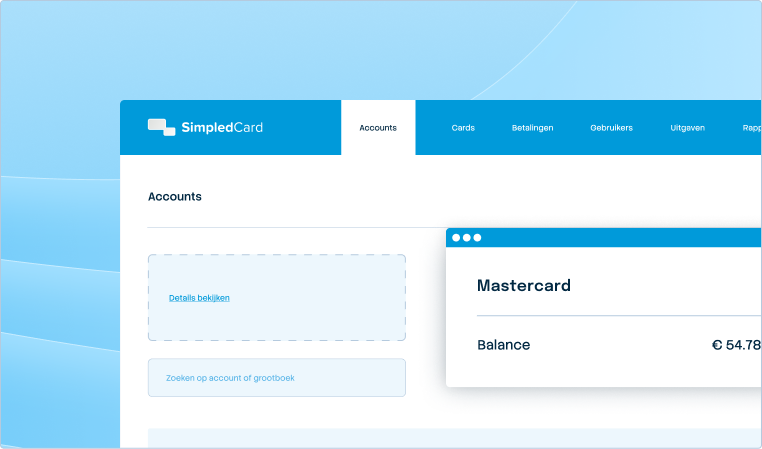
Managing your cash flow becomes much easier with a tool such as SimpledCard. It allows you to issue payment cards, track transactions in real time and process claims directly. This way, you keep a grip on all your business expenses. By linking to your accounting software, you always have insight into your current cash flows. Plan a demo in with our team to see how SimpledCard can help your organisation manage efficient cash flow.
Want to know how SimpledCard can help your business? Take contact with us or schedule a demo and find out how to make business payments more efficient, secure and convenient.

Published on: February 3, 2025